About Me
Hi! I'm The Aypisam FPV, a French computer science & AI student at CESI.
Everything you know about me, you know it only because I let you.
Latest News
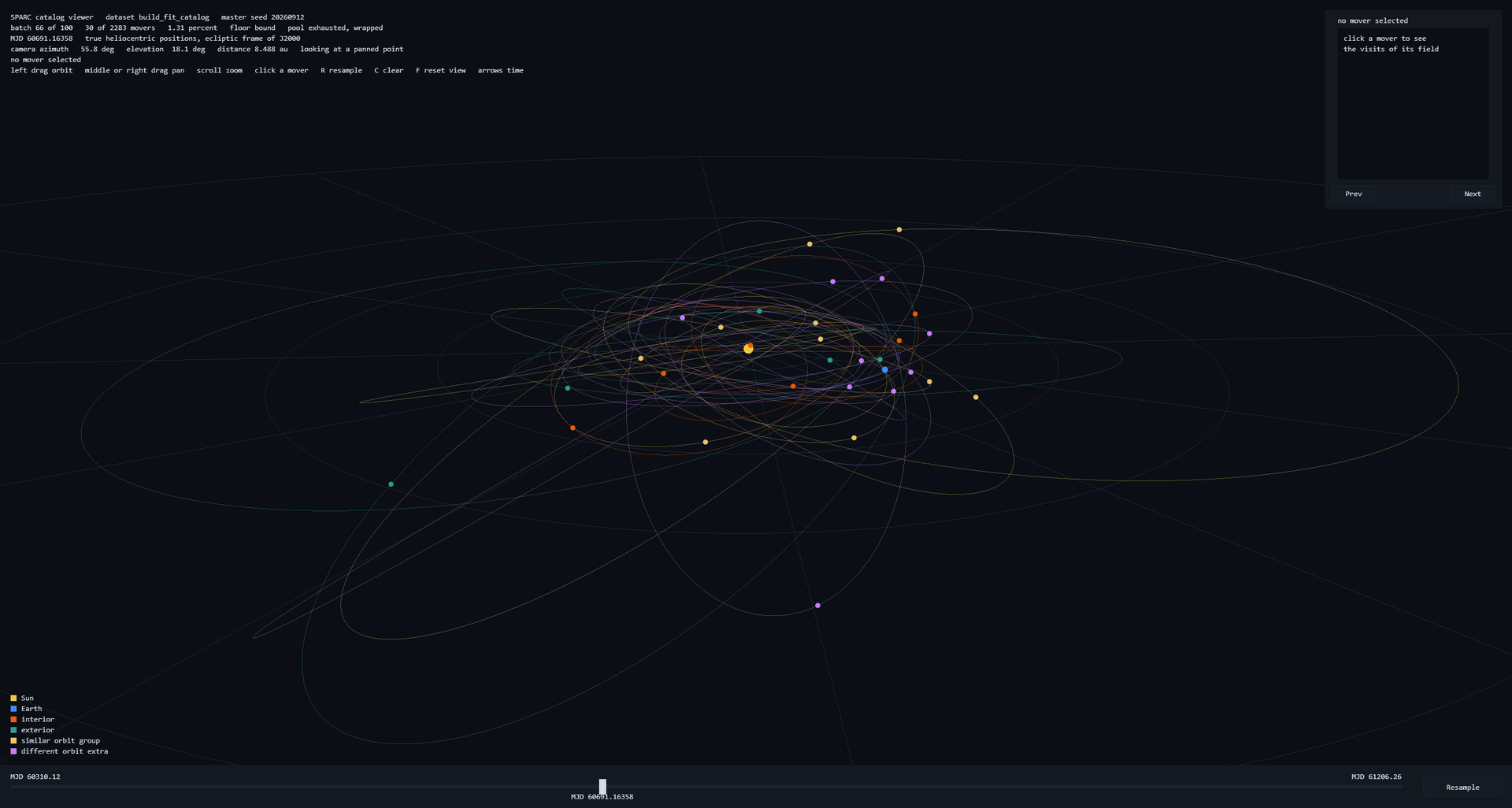
Currently developping SPARC (Synthetic Pair-to-Arc Recovery of Candidates), an AI pipeline that finds moving objects like asteroids in sky images: it detects sources, pairs them into same-night tracklets, then links those into multi-night arcs and fits their orbits. Trained on synthetic skies, now being tested on real ZTF frames.
(plz send RTX5090)
My Projects
SPARC
Synthetic Pair-to-Arc Recovery of Candidates: an AI pipeline that finds moving objects such as asteroids in sky images, from raw detections to fitted orbits.
A neural network detects and scores sources with a calibrated per-detection uncertainty, detections are paired into same-night tracklets, then an MLP scorer links tracklets into multi-night arcs that are fitted with a two-body Kepler ranging step. Every stage is validated on its own, with strict checks on reproducibility (fixed seeds, pinned runs), data leakage and calibration.
Trained on synthetic skies, now being tested on real ZTF frames. Runs on CUDA with an RTX 2060.
Note: This is an in-progress project and is not publicly available yet.
DockSight
A highly complex Proof of Concept (POC) for a vision-only system to detect, track, and position containers in 3D space.
Developed during an internship, it integrates advanced YOLO-based detection, single-optic visual odometry and GPS for camera tracking and positioning, and 3D visualization using the Ursina engine.
Note: This is an internal company project and is not publicly available.

Autopilot
Vision-based trajectory planning from two consecutive front camera frames, with optional ego-history context and a non-uniform 3-second prediction horizon.
The current primary model is Motion-FPN + Cross-Attention Kinematic V2, outputting 12 future kinematic states (speed_mps, yawRate_radps). It is currently training on the NVIDIA PhysicalAI-Autonomous-Vehicles dataset.
Video below shows a legacy Early Fusion + Attentive GRU model demo.

EQ Mount DIY Go-To Kit
A DIY conversion of an EQ3-2 equatorial telescope mount into a computer-controlled go-to/tracking mount: an Arduino Mega 2560 + CNC Shield V3 + two NEMA17 steppers, driven from a Python/Qt GUI with a live OpenGL sky map.
The GUI computes the position of 871,137 stars, the Messier catalog and thousands more DSOs, constellations, Sun/Moon/planets via the JPL DE421 ephemeris and the ISS via live TLE propagation, then commands the firmware over USB serial to slew and track at sidereal, solar or lunar rate. On-board motion control handles acceleration ramps, gear-ratio/backlash compensation and EEPROM persistence.

Bad Apple on BatPU-2
This project is a port of the Bad Apple video to the BatPU-2, a 8-bit computer designed by mattbatwings in Minecraft, programmable in ASM using a custom instruction set.

Neural Network Visualisation
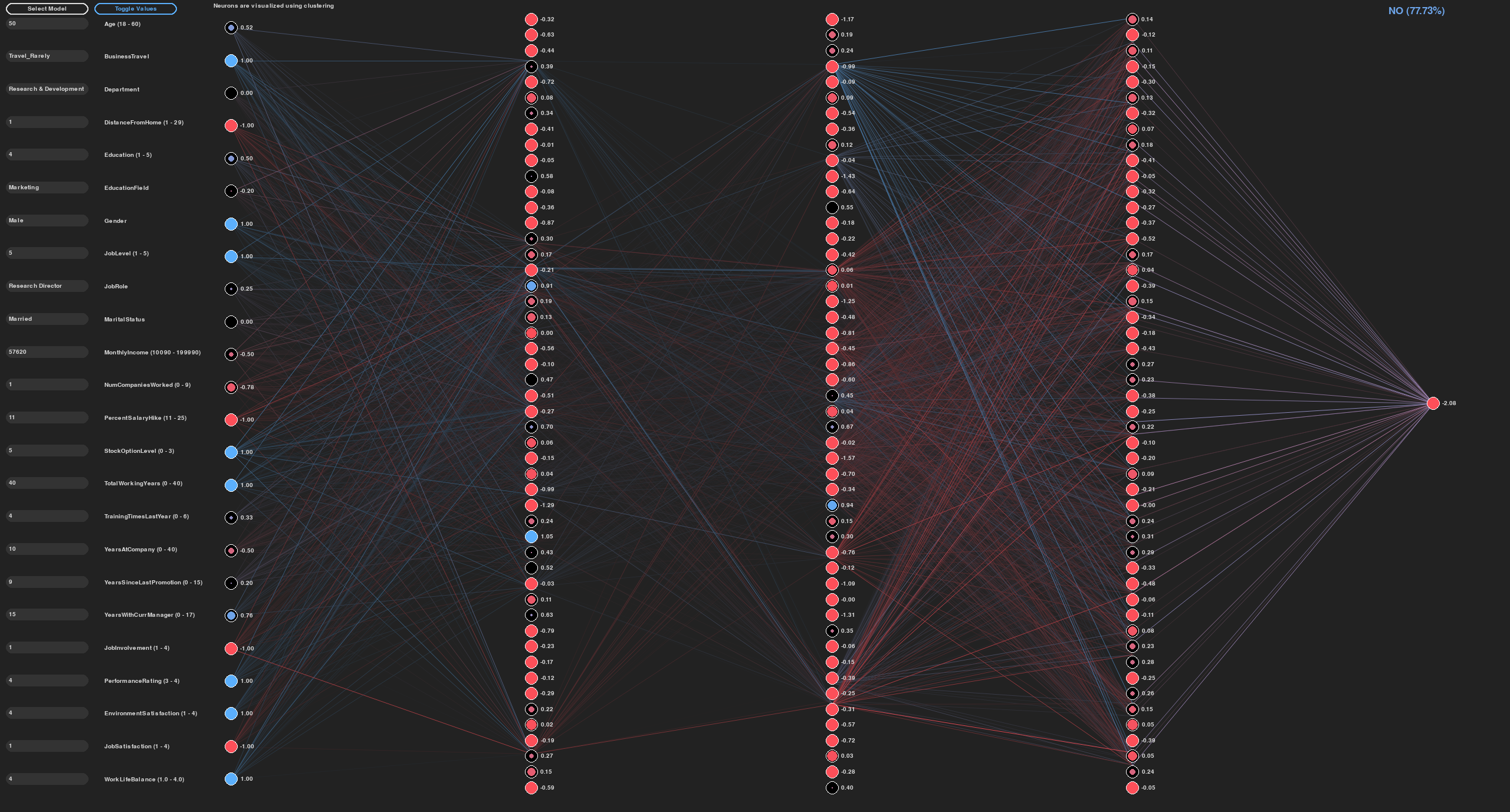
Python tool used to visualize and use a Neural Network.
CESI Bad Apple
I use at least one thing learned during a course to play Bad Apple!! (Video and/or Sound)